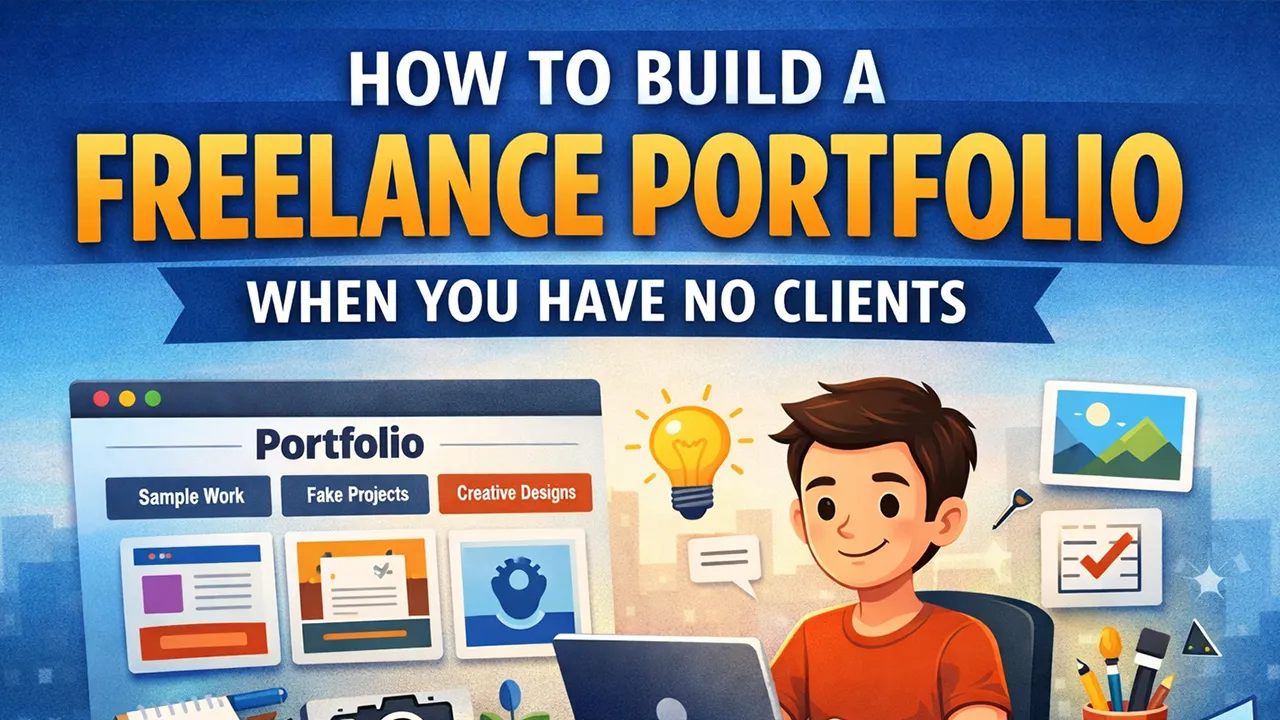
Build Freelance Portfolio : Starting a freelance career can feel challenging when you do not have any previous client work to show. One of the most common questions beginners ask is: How can I build a freelance portfolio if no one has hired me yet?
This situation is very common for new freelancers. Clients often want to see examples of your work before hiring you, but you cannot show examples because you have not worked with any clients. This creates a frustrating cycle for beginners.
The good news is that you do not need real clients to create a strong portfolio. Many successful freelancers started their careers by showcasing personal projects, mock work, and practice assignments that demonstrate their skills. What matters most is your ability to show what you can do.
In this guide, you will learn practical and proven ways to build a professional freelance portfolio even when you have zero clients.
Why a Portfolio Matters for Freelancers
A freelance portfolio is essentially your proof of skill. When potential clients visit your website or profile, they want to quickly understand three things:
- What skills you have
- What type of work you can deliver
- Whether your work quality matches their expectations
Without a portfolio, clients have no way to evaluate your abilities. Even if you are talented, they may hesitate to hire you because they cannot see evidence of your work.
A strong portfolio helps you:
- Build trust with potential clients
- Demonstrate your expertise
- Show your style and approach to work
- Stand out from other freelancers
The important thing to remember is that clients care more about the quality of your work than whether it came from a paid project.
Create Personal Projects That Demonstrate Your Skills
One of the easiest ways to build a freelance portfolio without clients is by creating personal projects. These are self-initiated projects that showcase your skills as if you were working for a real client.
The key is to approach these projects professionally. Instead of creating random work, imagine a realistic scenario where a business needs your service.
For example, if you are a web designer, you could create a website for an imaginary coffee shop. Start by thinking about the business needs. A coffee shop website usually needs sections such as a menu, location information, opening hours, and an attractive homepage that encourages customers to visit.
By designing a website that solves these needs, you are not just showing design skills. You are demonstrating your ability to think about user experience and business goals.
Similarly, a freelance writer can create blog posts for a fictional brand, while a graphic designer can design branding materials for an imaginary company. These projects can look just as professional as real client work when presented properly.
Redesign Existing Websites or Brands
Another effective strategy is to redesign existing websites, logos, or marketing materials. Many businesses have outdated or poorly designed digital assets, which makes them perfect practice opportunities.
Choose a business and analyze what could be improved. For example, a restaurant website might have confusing navigation or outdated visuals. You could create a modern redesign that improves the layout, colors, and user experience.
When adding this work to your portfolio, clearly explain the process. Describe what problems you identified and how your redesign solves those issues.
This approach shows potential clients that you can:
- Analyze existing problems
- Develop creative solutions
- Improve the overall user experience
These are valuable skills that many clients look for when hiring freelancers.
Work With Nonprofits or Small Local Businesses
If you want real-world projects in your portfolio, consider helping nonprofits or small local businesses. Many organizations need professional help but may not have the budget to hire experienced freelancers.
You can offer your services at a low cost or even volunteer your time in exchange for permission to showcase the work in your portfolio.
For example, you might help a local business with:
- Designing a simple website
- Creating social media graphics
- Writing website content
- Designing promotional posters
This type of work benefits both sides. The organization receives professional help, and you gain practical experience that can strengthen your portfolio.
You may also receive testimonials from these organizations, which can add credibility to your freelance profile.
Turn Practice Work Into Portfolio Pieces
If you have learned your skills through online courses or tutorials, you probably already have several practice projects. Instead of leaving them unused, refine them and turn them into professional portfolio examples.
Start by reviewing your previous work carefully. Improve any weak areas and polish the final presentation. You can also expand the project by adding more features or improving the design.
For instance, a coding student might have built a basic web application as part of a course. By improving the design, adding documentation, and explaining how the application works, the project can become a strong portfolio example.
The goal is to show what you learned and how you applied those skills.
Present Your Work as Case Studies
Many beginners simply upload images or screenshots of their work. While this shows the final result, it does not explain the thinking behind the project.
A better approach is to present your work as case studies.
A simple case study can include the following elements:
- The problem or goal
- Your approach to solving it
- The steps you followed during the project
- The final outcome
For example, if you designed a website, you could explain the design challenges and how your layout improves usability.
This type of presentation helps clients understand how you think and work, not just what you create.
Build a Simple Portfolio Website
Having your own portfolio website makes you look more professional and serious about freelancing. Fortunately, creating a basic portfolio website is easier than ever.
A simple portfolio website usually includes:
- A homepage introducing who you are
- An about page explaining your skills and background
- A portfolio section showing your best work
- A services page describing what you offer
- A contact page so potential clients can reach you
Your website does not need to be complex. What matters most is clarity, organization, and good presentation.
A clean and simple portfolio often leaves a stronger impression than a complicated website with poor design.
Focus on Quality Instead of Quantity
When building a beginner portfolio, it is tempting to include as many projects as possible. However, this approach can reduce the overall impact of your work.
Clients prefer seeing a few strong examples rather than many average ones.
A good beginner portfolio typically includes around five to eight high-quality projects. Each project should clearly demonstrate a specific skill or solution.
Before adding a project to your portfolio, ask yourself whether it truly represents your best work. If the answer is no, it is better to improve the project or leave it out.
Keep Improving Your Portfolio Over Time
Your freelance portfolio is not something you create once and forget. As you gain experience and work with real clients, you should continuously update and improve it.
Replace older projects with stronger ones, add detailed case studies, and showcase real client results when possible.
Over time, your portfolio will become one of the most powerful tools for growing your freelance business.
Final Thoughts
Building a freelance portfolio without clients may seem difficult at first, but it is completely achievable with the right approach. By creating personal projects, redesigning existing work, helping nonprofits, and presenting your work through clear case studies, you can demonstrate your abilities even before landing your first paid project.
Remember that clients are primarily interested in what you can do, not just who you have worked for. If your portfolio clearly shows your skills and problem-solving ability, many clients will be willing to give you an opportunity.
The most important step is simply to start creating. With consistent effort and continuous improvement, your portfolio will gradually grow and open the door to your first freelance clients.