Get Clients Without Upwork : The alarm on your freelance platform dings. You’ve got a notification. For a split second, your heart leaps—maybe it’s a client. But you log in to find it’s just an update to the terms of service, or worse, a notification that you’ve lost a bid to someone offering to do the same work for a fraction of your rate.
If this scenario feels painfully familiar, you are not alone. Platforms like Upwork and Fiverr can be great for absolute beginners to understand how freelancing works, but they often turn into a "race to the bottom." You are competing with thousands of other freelancers globally, paying hefty commission fees (sometimes up to 20% of your earnings), and ultimately, you are renting access to a client rather than building a real relationship .
The freelancers who thrive long-term don't rely on algorithms. They build direct pipelines. They get clients who find them, trust them, and pay them what they are worth. Here is the good news: You don't need to be a marketing guru to do this. You just need a strategy.
Once you start attracting these direct clients through the methods above, the next challenge is knowing what to charge them. If you've been used to Upwork's low rates, you might need to read our guide on How to Set Your Freelance Rates and Stop Leaving Money on the Table to ensure you get paid what you're worth.
Also Read

In this guide, we’ll explore 15 actionable ways to find high-quality freelance clients without ever setting foot on a bidding site. These methods focus on building relationships, showcasing your value, and taking control of your career.
Phase I: The Foundation - Get Found
Before you start chasing clients, you need to build a home base that makes people want to hire you. If a potential client Googles your name and finds nothing, or a messy social media profile, they will move on to someone who looks more established.
1. Build a Niche-Specific Personal Brand
Generalists often struggle to get hired because they blend into the crowd. Specialists, on the other hand, become the go-to expert. Instead of saying, "I am a graphic designer," try positioning yourself as, "I help SaaS startups design landing pages that convert."
When you define your niche clearly—who you help and what problem you solve—you stop being a commodity. Clients don't compare you on price alone because they perceive you as the expert who understands their specific world .
2. Optimize Your LinkedIn Presence
LinkedIn is arguably the most powerful client acquisition tool for B2B freelancers. It’s a searchable database of decision-makers. But you need to treat your profile as a landing page, not a resume.
- Headline: Don't just put "Freelance Writer." Put "Freelance B2B Writer Helping Fintech Brands Simplify Complex Topics."
- About Section: Focus on the results you get for clients, not just your work history.
- Featured Section: Use this space to showcase case studies or portfolio pieces.
A fully optimized profile makes you discoverable when clients search for the specific help they need .
3. Create a Simple, Professional Portfolio Website
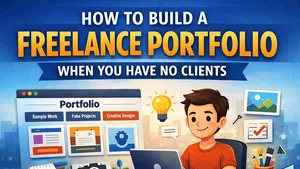
You don't need a fancy, expensive website. You need a simple digital storefront that includes three things: who you help, what you’ve done (with examples), and how to contact you. Build a freelance portfolio even If you don't have client work to show yet, create sample projects or case studies based on hypothetical scenarios. Something is better than nothing, and it proves you have the skills .
4. Create Value-Driven Content
Content is how you build trust at scale. When a client reads your blog post or watches your video, they are getting a sample of your expertise before they ever email you.
Start by answering the questions you get asked most often by clients. Share these answers on LinkedIn, write short posts on Medium, or create quick tutorials. The goal isn't to go viral; it's to get a prospect thinking, "Wow, this person really knows their stuff. I should hire them." .
Phase II: Proactive Outreach - Go Get Them
You can't just build it and hope they come. Sometimes you have to go out and start conversations. The key here is to be helpful, not "spray and pray."
5. Tap into Your Warm Network
This is the number one, most effective way to get your first (or next) client. Your former colleagues, old bosses, friends, and even family already trust you. They know your work ethic.
The mistake most freelancers make is assuming these people know they are available. They don't.
Send a simple, casual message: "Hey [Name], hope you're doing well! Just wanted to share that I've launched my freelance [Your Service] business. I'm currently looking to help a few clients with [specific problem you solve]. Do you know anyone who might be looking for that kind of help?" This takes the pressure off and opens the door for referrals .
6. The Art of the Personalized Cold Email/Message
Cold outreach gets a bad rap because most people do it terribly. They send generic copy-paste messages that end up in the trash.
To do it right, you need to do your homework.
Writing a personalized email is crucial, but knowing exactly what to say can be tough. If you are stuck staring at a blank screen, check out our collection of Cold Email Templates That Actually Get Replies to get started today.
- Find the right person: Don't email "info@company.com." Find the Marketing Manager or the Head of Product on LinkedIn .
- Personalize: Mention something specific about their company—a recent funding round, a new product launch, or a challenge in their industry.
- Add value: Don't just say "I want to write for you." Say, "I noticed your blog hasn't been updated in two months. I specialize in [topic] and have helped similar companies increase traffic. I'd love to share a few content ideas."
Five thoughtful, personalized emails will always outperform fifty generic ones .
7. Partner with Agencies
Digital marketing agencies, web development firms, and creative studios often have more work than they can handle. They frequently look for reliable freelancers to subcontract to.
Research boutique agencies in your niche and reach out to them. Offer to be their "overflow" support. For the agency, this is a win—they get to say "yes" to more projects without hiring a full-time employee. For you, this means consistent, high-quality work without the admin hassle of finding the end client yourself .
8. Network in Industry-Specific Communities
Stop spamming "Looking for work" posts in general Facebook groups. Instead, find where your ideal clients hang out. This could be a specific Slack group for startup founders, a subreddit dedicated to e-commerce, or a private forum for HR professionals.
Join these communities. Don't pitch. Just be helpful. Answer questions. Share resources. Over time, people will recognize your name, and when they need your service (or know someone who does), they will come to you .
9. Attend Local Business Meetups
While the world is digital, there is still immense power in face-to-face connection. Local small business owners often need freelance help but don't know where to look.
Attend your local Chamber of Commerce meetings, business networking events, or industry conferences. Bring business cards, but more importantly, bring a listening ear. Ask people about their businesses and their struggles. If you can solve a problem for them, you've got a client .
Phase III: Leverage Relationships - Let Them Come Back
Acquiring a new client is expensive in terms of time and energy. Keeping one, or getting one through a friend, is much easier.
10. Build a Referral Engine
Referrals are the holy grail of freelancing. A referred client already trusts you because someone they trust vouched for you. However, referrals don't usually happen by accident.
You need to ask for them. When you finish a project and the client is happy, say: "It was a pleasure working with you. If you know any other businesses who might need help with [your service], I'd really appreciate an introduction."
To sweeten the pot, consider offering a referral bonus—like 10% off the client’s next invoice or a gift card. This turns your happiest clients into a sales force .
11. Cultivate Repeat Business
One-off projects are great, but retainers are where stability lives. Look at the work you just completed. Is there a logical next step? Does the client need ongoing maintenance, monthly reports, or weekly content?
If you designed a website, offer a monthly maintenance package. If you wrote an eBook, offer to write the email sequence to promote it. Pitching an existing client is far easier than pitching a cold lead, and it provides them with a seamless solution .
12. Ask Current Clients for Testimonials and Case Studies
Social proof is everything. A potential client is far more likely to trust you if they see you’ve delivered results for someone else.
Ask your happy clients if they would be willing to provide a short testimonial. Even better, ask them if you can write a detailed case study about the project. This gives you powerful content for your website and portfolio. It also makes the client feel valued and special .
Phase IV: Creative & Strategic Tactics
Sometimes you need to think outside the box to stand out.
13. Repurpose Your Content Across Platforms
You are busy. You don't have time to create unique content for Instagram, LinkedIn, Twitter, and a blog. So don't.
Create one solid piece of content (a long LinkedIn post, a blog article) and repurpose it. Turn the main points into a Twitter thread. Take a quote from it and turn it into a graphic for Instagram. Record a quick video summarizing it for TikTok or YouTube Shorts. This increases your visibility without burning you out .
14. Offer a "Micro" Service or Audit
Big projects can be scary for potential clients to commit to. Lower the barrier to entry.
Offer a "Website Audit," a "Content Gap Analysis," or a "Conversion Rate Review." Charge a small, fixed fee for this. It gives the client a taste of your expertise and a roadmap of what needs to be done. Often, once they see your recommendations, they will hire you to actually implement them .
15. Use Guest Posting or Podcasting
Find blogs, newsletters, or podcasts that your ideal clients already read or listen to. Pitch them a topic idea that showcases your expertise.
If you get published as a guest on a popular marketing blog, or interviewed on an industry podcast, you are instantly placed in front of a highly targeted audience as an authority. This is one of the fastest ways to build credibility and attract inbound inquiries .
Conclusion: Building Your Ecosystem
Escaping the Upwork rat race isn't just about making more money—it's about regaining your peace of mind. It's about building a freelance business that doesn't disappear when the platform algorithm changes.
Think of these 15 methods not as a checklist you have to do all at once, but as an ecosystem you are building .
- Your content (Ways #3, #4, #13) builds trust.
- Your outreach (Ways #5, #6, #8) plants seeds.
- Your relationships (Ways #10, #11, #12) create a cycle of repeat and referral business.
You don't need to be on every platform. You just need to be consistent in the right places . Pick two or three strategies from this list that feel most comfortable to you. Master them. Show up every day.
Over time, you will stop chasing projects and start attracting clients who already know, like, and trust you. That is the definition of a sustainable freelance career.